WPW – week 3 RPR

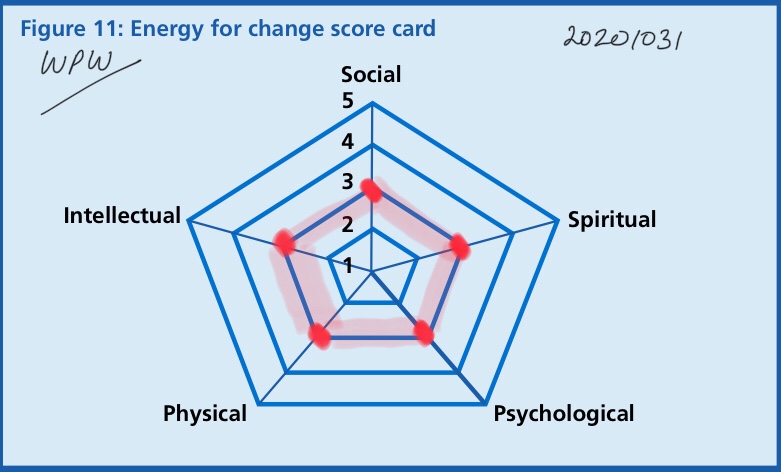
The external growth this week has mostly been in the intellectual and physical energy domains. Notably – delivering the first session of a training program I am offering to ED clinicians interested in quality and clinical audit. And upgrading a proposed ED geriatric referral pathway to a patient flow pathway – shifting the central focus back to the patient.

Diminishing psychological safety at the organisation-ED interface has been the challenge for a second week running. I find myself coming back and taking refuge in the spiritual domain of our work – a purpose and perspective that helps me acknowledge the suffering without it becoming overwhelming.

Serenity to accept what I can not change, courage to make the changes I can, and experiential insight to recognise the difference. Compassion in practice.

WPW – week 2 RPR

Positives this week – seeing leadership and new confidence express itself in an ED registrar’s board round. Plus nurturing the leadership wings in a member of an ED Frailty Intervention Team (that I am responsible for).

The monthly ED journal club continues to mature, in particular relationships and shared learning between the registrars. An opportunistic teaching moment this week – reinforcing the ethics/integrity that must be at the heart of everything we do as clinicians – research and beyond.

My most difficult moments this week – experiencing the physical symptoms and the hit to psychological safety that arise from management meetings without good governance. Observable changes in concentration, mood, energy levels, headache – not dissimilar to carbon monoxide poisoning!

Personal area to grow – allowing myself the self compassion to focus on what matters most and let go of career aspirations that necessitate carbon monoxide type toxidromes.

WPW – week 1 RPR

Feels like a good week. The Europe wide research study our department is participating in connects us with a bigger picture and higher purpose, nourishes social engagement and provides a channel for physical action.

Also protected some 1:1 time with ED Quality Improvement Project registrars. Helped them understand the difference between medical research and quality improvement. Reinforced the importance of a moral compass – looking deeply and understanding where our (project) volition comes from.

Personal positive – concentrated most of my time and energy on my sphere of influence. Action and agency.

Personal area to grow – meeting people where they are, and not where I want/expect them to be ! Balancing the real life time pressure of delivering on research and departmental change while still providing young minds a safe space to learn.

Compassion in practice.

WPW – Work Place Wellbeing

What does “human factors” mean in an Emergency Department world of Covid 19 and how can my ongoing training in it make a difference to where I work ?

As a first step, I am introducing Zoom based sessions on quality improvement methodologies, adapted to my local setting. Gently redirecting attention from our circle of concern to our sphere of influence – individually and collectively.

My belief – action and agency in these difficult times help relieve suffering and maybe even promote well being in the workplace. Compassion in practice.

Start of a Journey #AnotherWay

It’s a little over three decades since I joined medical school and I find myself starting a new journey – exploring deep compassion in clinical practice.

I will be doing so through a Masters program “Human Factors in Patient Safety” offered by the Royal College of Surgeons of Ireland from this September. A little nervous, and very excited.

Human factors” can mean different things to different people. For me, it is about exploring how compassion influences the interdependence between human beings and clinical systems. Anyone who has experienced genuine compassion knows the effect it can have on clinical outcomes – how might it be possible to reproduce this at a “system” level ? And if we did, what kind of effect might it have ? In short – could there be #AnotherWay to how we deliver care ?

I hope to share what I discover over the coming months through this blog …

IMG_4061


A Three Breath Traffic Light


traffic-lightsAs I prepare a resilience workshop, I would like to offer you a simple tool called the three breath Traffic Light.

In essence, you keep an image of a traffic light somewhere easy to find – like your phone or on your desk. Have an alarm prompt you every so often to look at this image.

The Red Light – is to remind you to just stop and breathe.

The Orange Light – to breathe and be aware you are breathing.

The Green Light – to breathe and then go.

While this may sound childishly simple, it’s power can be immense. Neurophysiologically speaking, “stopping” interrupts fear and flight or fight circuits from continuing to spread beyond their origin in the amydala. Becoming aware of the feeling of our breath, strengthens the links between the right and left sides of the brain. Finally when we breathe mindfully and “go” it restores brain function and control to the executive centres in the pre frontal cortex.

Or put simply, it gives us the power to choose how to respond, rather than be driven by subconscious lower brain impulses.

Faced with the breaking point pressures in the NHS as we have been for 3 years, it is worth remembering tools similar to this have helped rebuild inner strength and resilience in children exposed to much worse – the devastating trauma of 9/11. If it can work for them, it can work for us. Will you give it a try ?

Inner Resilience Program

Social and Emotional Learning

IMG_1396

Breakfast Rounds

img_0117


Which comes first – my role as a doctor or my role as a human being ?

Recently, with clinical need exceeding inpatient bed availability, patients have been forced to spend the night boarded in their local Emergency Departments. Which brings me to my dilemma.

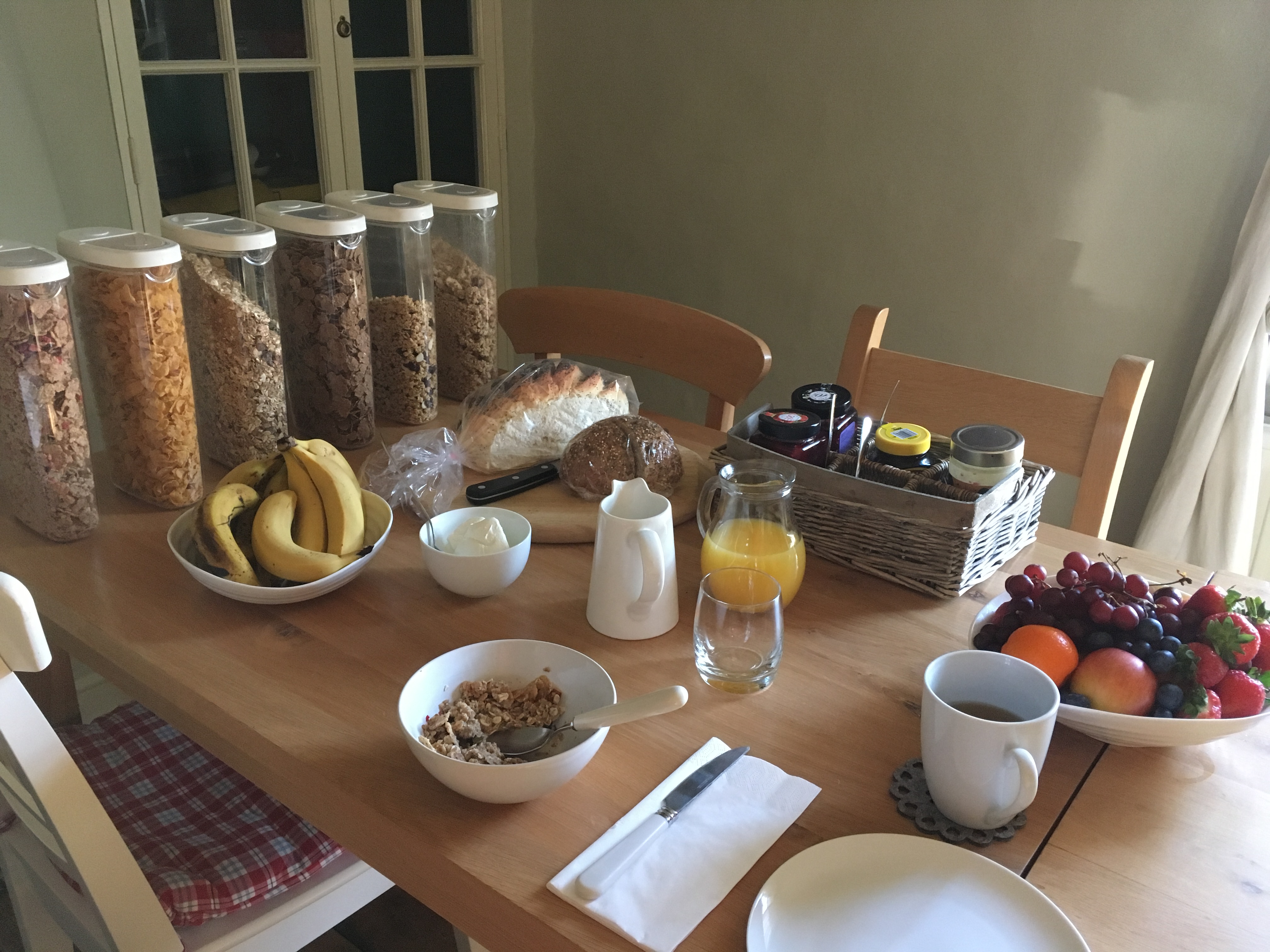
Imagine I come in at 8 am. I start with a “ward” round on these overnight patients. I come to patient number two and find a frail 81 year old lady who has been in ED for hours with very little to eat or drink. I look for a health care assistant or hospital volunteer who could bring my patient some breakfast. There isn’t anyone. I look for my patient’s nurse and find she is stretched between several other patients, about to start antibiotics on someone septic while simultaneously organising the urgent transfer of a patient she needs to take down to CT. (gone for another 30-40 minutes at least). So it comes down to me –  do I  stop the round and make tea and toast for this lady and other overnight stay patients myself ? Or do I delegate the task –  knowing it may be an hour or more before it gets done – and instead check whether the remaining boarded patients have serious medical problems to sort ?

I honestly don’t know. Like Australian Lieutenant General David Morrison, I believe the standard you walk past is the standard you accept. And this is a standard I can not accept.

My friend and colleague Damian Roland wrote about being the kind of consultant who answers the telephone.

Another friend (and fellow ED consultant) routinely pushes patients on trolleys to the CT scanner when a hospital porter isn’t available.

While noble and good for the individual patient concerned, I wonder if such actions might weaken the system further, putting future patients (and staff) at greater risk. (“We don’t need more reception staff / porters / health care assistants – the doctor can answer the phone / push the trolley / get breakfast…”)

I guess some of it depends on how we as doctors communicate these issues to hospital managers, and how hospital managers in turn respond.

Till then however, my dilemma remains …


img_0716